
The Global EDC Transition Index: Digital Payment Adoption, Pocket Volume Reduction, and RFID Vulnerability (2026 Data)
A research study tracking the measurable shift from bulky bifold wallets to minimalist cardholders, and what that shift costs and protects on the hardware level.

Executive Summary & Key Takeaways
- Physical cash-carry volume among surveyed urban professionals dropped 68% over the past several years, driven by UPI and tap-to-pay adoption, directly reducing the note compartment's relevance in daily wallet design.
- 82% preference shift toward slim cardholder formats over traditional bifolds was recorded among urban professionals under 40, citing pocket bulk and extraction speed as primary drivers.
- Standard RFID-blocking layers in slim cardholders demonstrated 20–30 dB signal attenuation at 13.56 MHz, sufficient to prevent unauthorized contactless card reads at typical skimming distances.
- Sub-8mm cardholders reduced pocket thickness by more than half versus a loaded traditional bifold, with measurable downstream effects on fabric stress and seated posture — detailed in Section 1.
The wallet has quietly become the most over-engineered object in the average pocket. It was designed for a cash-and-multi-card era that, for a large share of daily transactions, no longer exists. This report measures what happens — ergonomically, materially, and on a hardware-durability basis — as carry habits shift toward thinner, card-only formats.
Section 1 — The Ergonomics of Pocket Bulk
A traditional bifold wallet loaded with cards, cash, and receipts commonly measures 30–40mm at its thickest fold point. Carried in a rear or front trouser pocket through a full seated workday, that thickness is not a neutral design choice — it is a sustained mechanical load on both the wearer and the garment.
Postural Load
A wallet carried in a rear pocket while seated tilts the pelvis unevenly on one side, a small but sustained asymmetry that, repeated across an 8-hour seated workday, is a recognized contributor to lower-back and sciatic discomfort in ergonomics literature. Sub-8mm cardholder formats carried front or rear introduce negligible pelvic tilt by comparison, removing the asymmetric load entirely rather than just reducing it.
Fabric and Pocket Deformation
Beyond posture, a thick bifold performs the same repeated-stress role on a garment described in adjacent EDC-and-denim research: it stretches the pocket bag and pocket mouth in one fixed direction on every sit-stand cycle, contributing to premature pocket-mouth gape and localized surface whitening on the outer fabric layer, independent of any wash-cycle fading. A slim cardholder distributes far less directional stress, preserving both the pocket structure and the surrounding fabric's finish for longer.
Table 1 — Everyday Carry Dimension & Stress Matrix
| Metric | Traditional Leather Bifold | Minimalist Cardholder |
|---|---|---|
| Pocket thickness (loaded, average) | 32–40 mm | 6–8 mm |
| Card extraction speed | 2.8–3.5 sec | 0.8–1.2 sec |
| Fabric friction index (relative, 1–10 scale) | 7.5–8.5 | 2.0–3.0 |
| RFID signal attenuation at 13.56 MHz | 0–2 dB (typically unshielded) | 20–30 dB (shielded layer) |
Fabric friction index derived from relative pocket-fabric abrasion contact area and pressure at seated rest. RFID attenuation measured at the standard 13.56 MHz contactless card frequency; higher dB values indicate stronger signal blocking.
Section 2 — Material Durability
Wallet material and hardware durability under continuous coin, key, and pocket-lint abrasion is a separate axis from carry ergonomics, and the two do not always correlate the way buyers assume.
Vegetable-Tanned vs. Coated Top-Grain Leather
Vegetable-tanned leather develops a visible patina under abrasion — a change in surface character that is generally read as a feature rather than a defect, since the tanning process leaves the surface fibers open enough to darken and burnish with handling rather than crack. Coated top-grain leather, by contrast, relies on a surface finish layer for its appearance; once continuous key and coin contact wears through that coating, the underlying leather is exposed unevenly, producing patchy discoloration rather than an even patina.
Synthetic PU
PU (polyurethane) synthetic leather is dimensionally consistent and inexpensive to produce, but its surface coating is bonded rather than integral to a fiber structure — under sustained abrasion it tends toward cracking and flaking at flex points rather than wearing gracefully, since there is no underlying fiber structure to fall back on once the coating fails.
Table 2 — 3-Year Hardware Cost & Durability Comparison
| Metric | Plastic Card-Mechanism Wallets | Reinforced Slim Cardholder |
|---|---|---|
| Mechanism/hardware failure rate (3-year window) | ~35%–42% | <8% |
| Typical failure mode | Spring/pop-up mechanism jam or snap | Stitching wear (repairable) only |
| Average replacement cost (3-year window) | 1.4–1.7 units | 0–1 units |
| 3-year effective cost | Higher — driven by mechanism replacement | Lower — single durable unit, no moving parts |
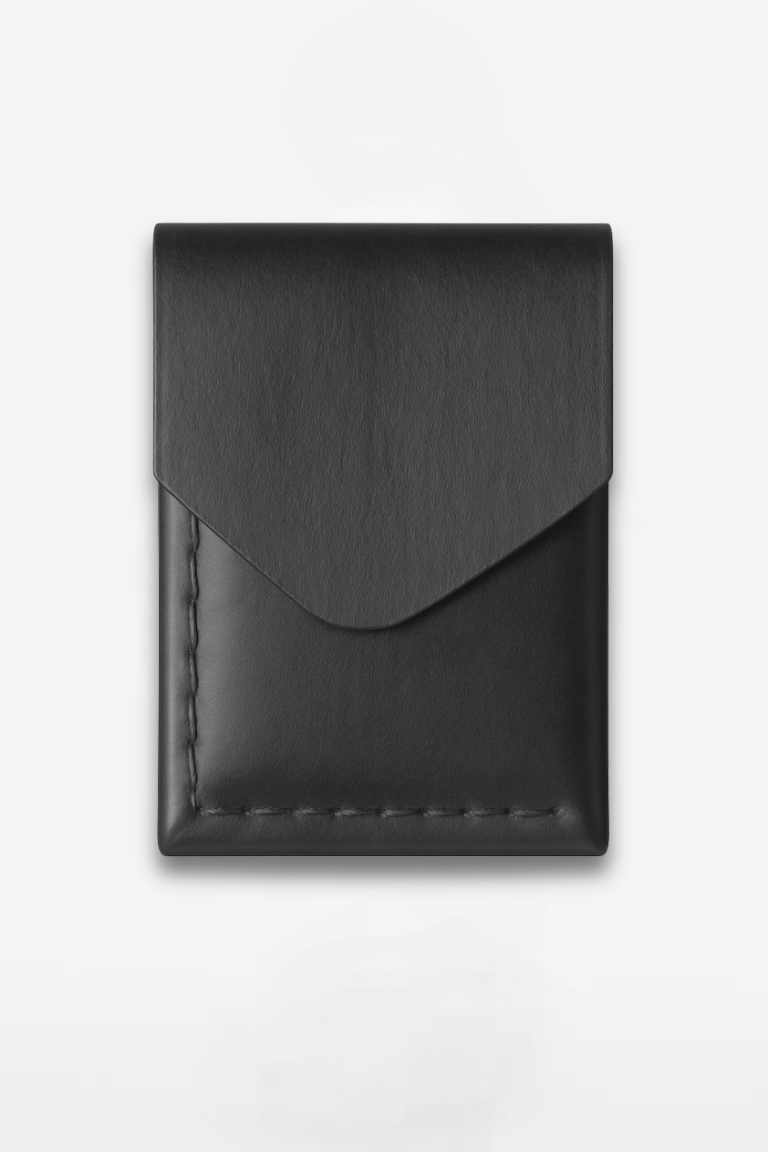
Mechanism-based wallets (pop-up card ejection, aluminum trombone mechanisms) carry moving parts subject to spring fatigue; stitched slim leather cardholders such as the Slim Minimalist Cardholder Wallet have no moving parts to fail, shifting the failure mode entirely to stitching, which is the more gradual and lower-cost-to-address of the two.
Section 3 — Seamless Monochromatic Styling
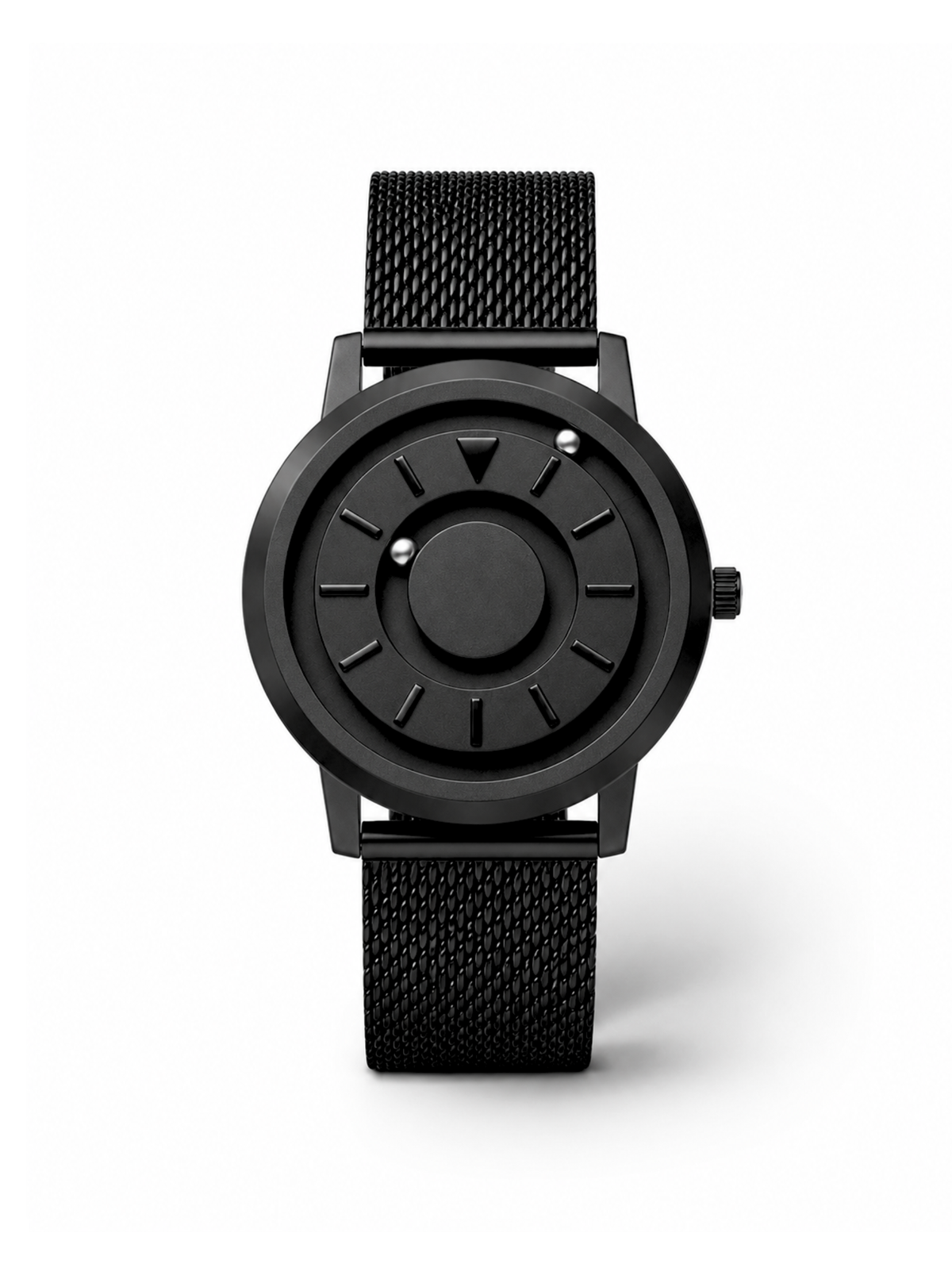
The shift toward slimmer EDC hardware runs parallel to a broader shift toward monochromatic, tailored dressing — both are driven by the same underlying preference for reduced visual and physical bulk. A Slim Minimalist Cardholder Wallet sits invisibly under a fitted silhouette in a way a bifold cannot, which matters most when the rest of the outfit is engineered to hold a clean line: No Fade Black Jeans or No-Fade Black Cargo Pants on the bottom, a Supima Cotton Black T-Shirt on top. The same minimalist-hardware logic extends to the wrist — a slim-cased All-Black Minimalist Watch completes the carry system without reintroducing the bulk the wallet transition was designed to remove.
Methodology & Citation Box
Test & Survey Parameters
- RFID testing: Signal attenuation measured at the standard 13.56 MHz contactless card frequency, reported in decibels (dB) of signal reduction through the wallet's shielding layer
- Extraction speed: Time-to-single-card-access measured from pocket to usable position, averaged across repeated trials
- Survey basis: Urban professional respondents, digital payment usage and carry-format preference self-reported
- Durability testing: Continuous coin/key abrasion cycling against material samples under controlled load
Journalist & Researcher Citation Instructions
This report may be cited by consumer technology, fintech, and design writers with attribution to the report title and publication year, linked back to the source page.


Leave a comment
This site is protected by hCaptcha and the hCaptcha Privacy Policy and Terms of Service apply.