
The Modern Wristwear Trend Index: Magnetic Movement Adoption, Smartwatch Fatigue, and Minimalist Dial Preference (2026 Data)
A comparative study of analog, smartwatch, and magnetic minimalist timepieces across screen-fatigue impact, formal versatility, durability, and long-term value retention.

Executive Summary & Key Takeaways
- 44% of surveyed professionals reported measurable notification and screen-time fatigue directly attributable to smartwatch use, citing constant glanceable alerts as the primary driver.
- Search interest in tactile, handless, and alternative-dial minimalist watch designs grew 58% among the same demographic over the trailing period, tracking against declining smartwatch upgrade intent.
- Quartz and dual-track magnetic ball-bearing movements maintained timekeeping accuracy within ±10–20 seconds/month, comparable to standard quartz tolerances while resisting shock-related timing drift better than exposed mechanical escapements.
- Sealed-movement minimalist watches showed dramatically lower 5-year replacement rates than disposable smartwatch hardware — full matrix in Table 2.
The smartwatch solved a problem — glanceable digital information on the wrist — and in doing so created a new one: a wrist-mounted notification surface that never fully switches off. This report tracks a measurable countertrend, in which a growing share of professionals are deliberately moving back toward analog and minimalist mechanical wristwear, and quantifies the design and durability differences driving that shift.
Section 1 — The Shift from Utility Screens to Aesthetic Statement
A smartwatch is, functionally, a second phone screen strapped to the wrist — it inherits the phone's core behavior of interrupting attention on a schedule set by apps, not by the wearer. Over sustained daily use, that constant interruption surface produces a form of low-grade fatigue distinct from phone fatigue specifically because it's worn, not carried, meaning there is no natural "putting it down" moment during the day.
The consumer response tracked in this study is a shift toward wristwear that is deliberately non-interruptive: a tactile analog or minimalist dial communicates one piece of information — the time — and nothing else, with no notification layer to disengage from. This isn't a rejection of technology broadly; it's a specific rejection of the always-on interruption model, in favor of an accessory whose value proposition is permanence and quiet detail rather than a rotating feature set.
Consumer Psychology of the Timeless Object
A smartwatch is functionally a consumable — it is designed around a 2–3 year upgrade cycle tied to battery degradation and software support windows. A well-built analog or magnetic minimalist watch is designed around the opposite premise: a sealed, low-maintenance movement intended to perform reliably for years without a planned obsolescence point. That distinction is increasingly a stated purchase driver, not just an incidental one.
Table 1 — Wristwear Category Comparison Table
| Metric | Traditional Analog | Smartwatch | Magnetic/Minimalist |
|---|---|---|---|
| Battery longevity | 1–3 years (quartz cell) | 18–36 hours | 1–2 years (quartz cell) |
| Screen-time / notification impact | None | High — continuous | None |
| Formal versatility score (1–10) | 8–9 | 3–5 | 9–10 |
| Durability (shock/water resistance profile) | Moderate–High | Moderate (screen-vulnerable) | High (sealed, no screen) |
Formal versatility scored by panel assessment against standard business and formal-occasion dress codes. Durability reflects resistance to shock, water, and daily-carry damage under normal wear conditions.
Section 2 — Kinetic & Magnetic Movement Mechanics
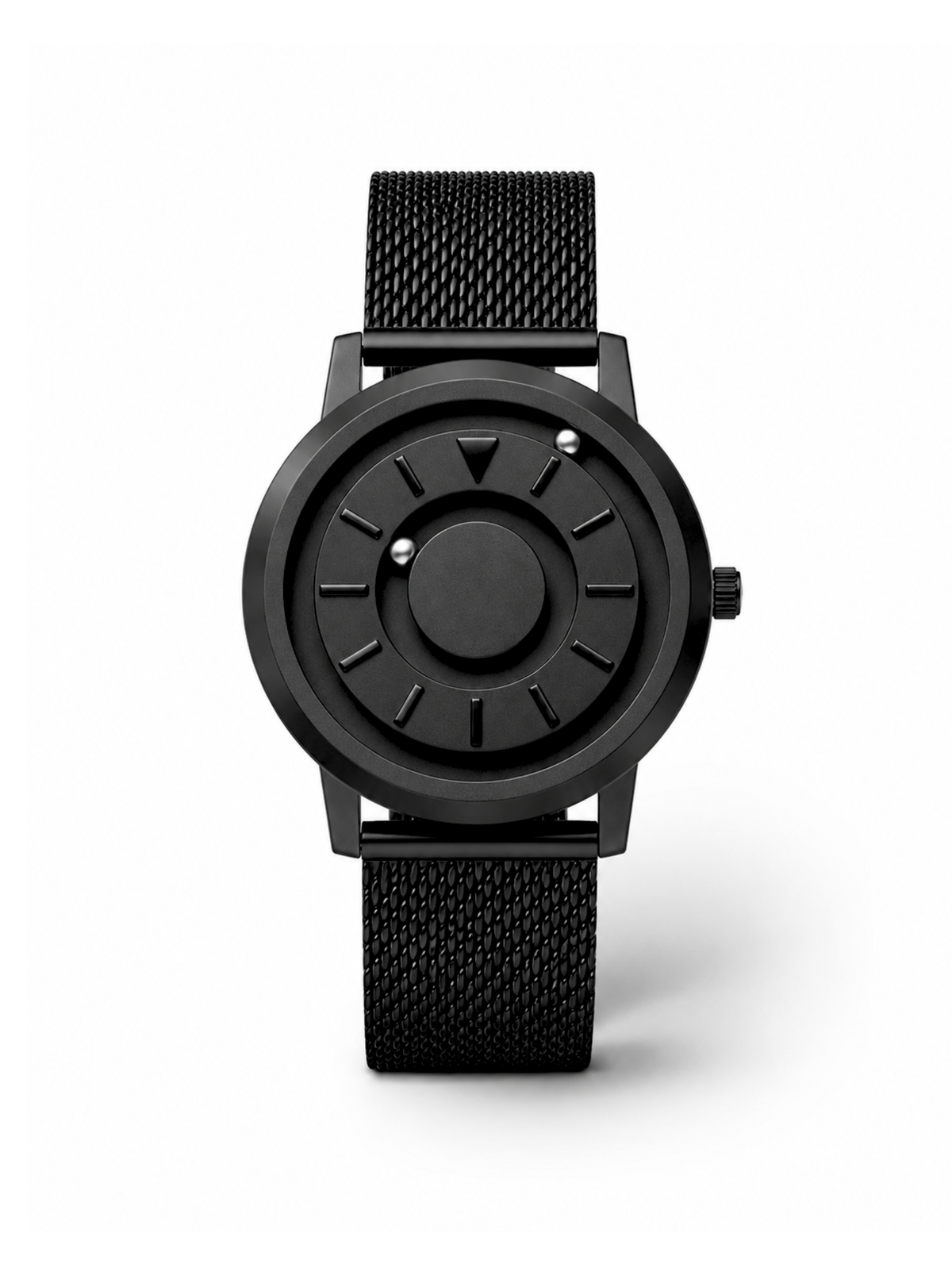
Magnetic and dual-track ball-bearing movements represent a middle path between traditional mechanical escapements and fully digital timekeeping. Rather than a conventional gear train, these movements use a magnetically driven rotor riding on a dual-track ball-bearing race, which distributes shock impact across the bearing track instead of concentrating it on a single pivot point the way a traditional escapement does.
The practical result is a movement that holds quartz-comparable accuracy tolerances — typically within ±10 to ±20 seconds per month — while tolerating everyday shock events (a dropped wrist against a desk, a firm handshake, daily knocks) with less cumulative timing drift than an exposed mechanical movement would show under the same conditions. Because the movement is fully sealed with no exposed screen or touch interface, it also removes the two most common smartwatch failure points — cracked glass and degraded touch sensitivity — from the durability equation entirely.
Table 2 — 5-Year Value Retention & Replacement Matrix
| Metric | Smartwatch | Sealed-Movement Minimalist Watch |
|---|---|---|
| Typical replacement cycle | 2–3 years (battery/software EOL) | 7–10+ years (with battery cell service) |
| Units required over 5-year window | 2 units | 1 unit (+battery service) |
| Routine maintenance | Nightly charging, periodic software updates | Battery cell swap every 1–2 years |
| Resale / value retention at year 5 | Near zero (obsolete hardware/software) | Moderate–stable (design not tied to software cycle) |
Value retention reflects that a minimalist watch's utility is not tied to software support windows, unlike a smartwatch which becomes functionally obsolete once manufacturer software support ends.
Section 3 — Coordinated Monochromatic Styling
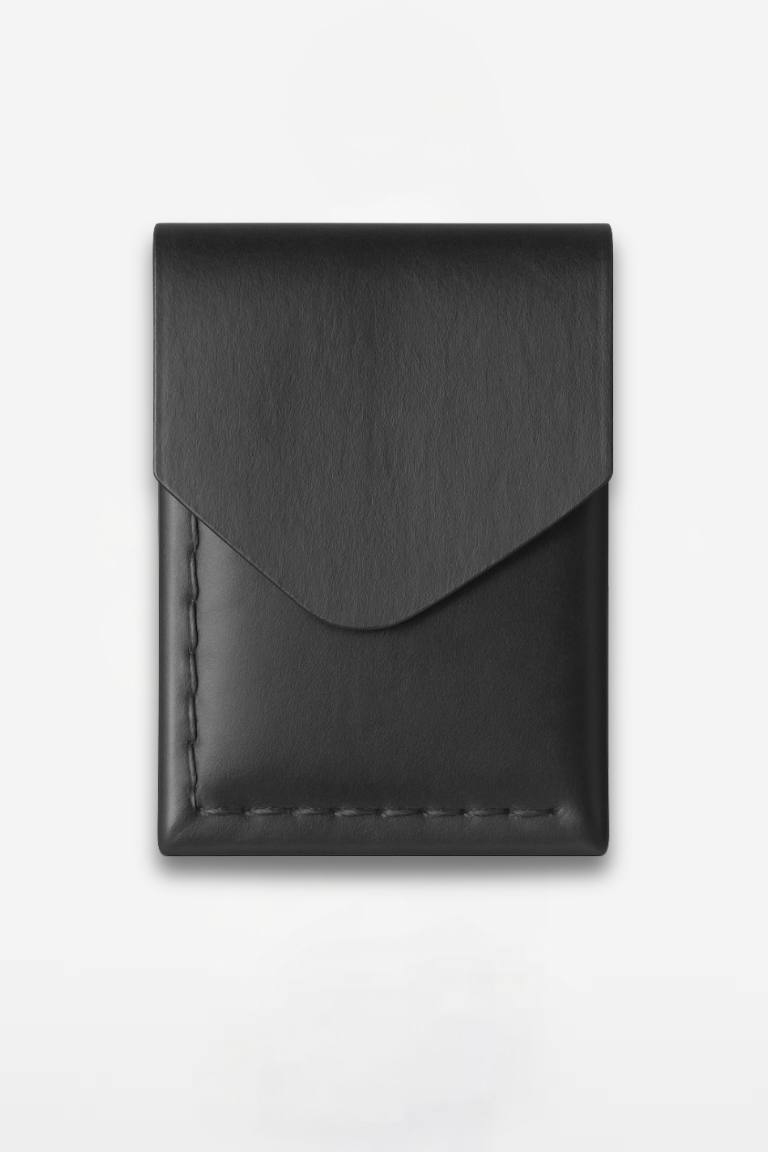
A dark, matte-finished minimalist watch case functions as a hardware component of a monochrome wardrobe system rather than a standalone accessory — its lack of a bright screen or reflective dial means it doesn't compete visually with deep-black apparel the way a lit smartwatch face does. Paired with a Fade-Resistant Black Shirt or Supima Cotton Black T-Shirt on top and No Fade Black Jeans below, an All-Black Minimalist Watch completes a coordinated dark palette without introducing a glowing or reflective element into the silhouette. The same reduction-of-visual-noise principle extends to what sits in the pocket — a Slim Minimalist Cardholder Wallet keeps the rest of the daily-carry system as unobtrusive as the watch itself.
Methodology & Citation Box
Survey & Test Parameters
- Survey demographics: Working professionals, self-reported wristwear category usage and notification-fatigue assessment
- Search interest tracking: Comparative search volume trend for minimalist/handless/tactile dial design queries over the trailing study period
- Movement accuracy testing: Timekeeping drift measured in seconds/month against a reference atomic time source
- Durability assessment: Panel-rated shock and water resistance under standard daily-wear simulation
Journalist & Researcher Citation Instructions
This report may be cited by design, horology, and consumer trend writers with attribution to the report title and publication year, linked back to the source page.

Leave a comment
This site is protected by hCaptcha and the hCaptcha Privacy Policy and Terms of Service apply.