
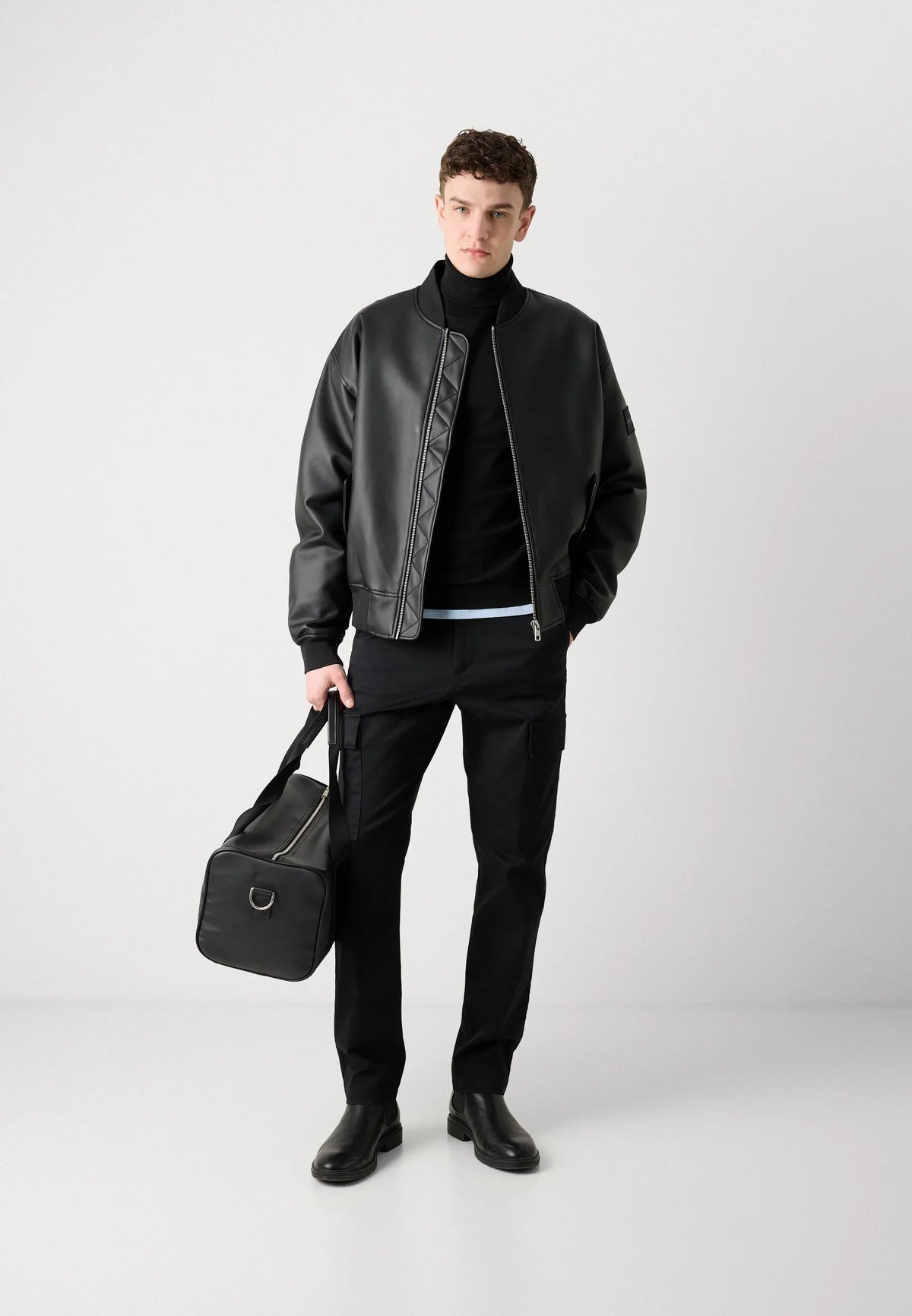
Utilitarian Workwear Tensile Report: Seam Shear Strength, Pocket Load Bearing, and Twill Abrasion Resistance (2026 Data)
An empirical comparison of seam construction, pocket load thresholds, and abrasion durability between standard retail cargo trousers and reinforced high-density twill cargos.

Executive Summary & Key Takeaways
- Standard retail cargo pocket seams reached visible stitch failure under 2.5 kg of sustained load, applied at a single fixed point simulating a phone-and-keys carry combination.
- Reinforced high-density twill cargos withstood 40,000+ Martindale abrasion cycles before measurable thread thinning at the knee and pocket-edge zones, versus early thinning by 15,000–18,000 cycles on standard retail twill.
- High-friction knee and crotch panels on unreinforced cargos showed up to 44% color retention loss by wash 25 — outpacing fade rates recorded on flat, low-friction panels of the same garment.
- Reinforced construction carried a higher unit price but produced a materially lower 3-year Cost-Per-Wear once replacement cycles were factored in — see Table 2.
Cargo trousers are evaluated by most buyers on pocket count and silhouette. Almost none of that evaluation touches the variable that actually determines whether the garment survives a year of daily carry: how the seams, gussets, and reinforcement points are engineered to bear repeated mechanical load. This report treats a pair of cargo trousers as a load-bearing structure first and a style category second.
Section 1 — Mechanical Stress Vectors in Utility Trousers
A pair of cargo trousers under daily use experiences concentrated, repeated stress at a small number of predictable points, not uniform wear across the whole garment. Three construction elements determine whether those points hold or fail over time.
Gusset Reinforcement
A crotch gusset — a diamond-shaped fabric insert at the inseam junction — redistributes the tension generated by walking, squatting, and climbing across a wider seam area instead of concentrating it at a single crossed-seam point. Trousers without a gusset rely entirely on the crossed seam itself to absorb that tension, which is the single most common failure point in unreinforced work trousers, typically appearing as a blown seam at the inner thigh well before the surrounding fabric shows any wear.
Bar-Tack Stitching Density
Bar tacks — dense, short reinforcement stitches at pocket corners, belt loops, and pocket-flap attachment points — exist specifically to arrest stress concentration at corners, where a standard straight-line seam would otherwise be the first point to tear under load. Reinforced garments typically run a higher bar-tack stitch count per load-bearing corner than standard retail construction, directly increasing the load a pocket corner can sustain before the stitching itself shears.
Elastane Fatigue Under Cyclic Load
In a 98/2 cotton-spandex stretch twill, the elastane component allows the fabric to flex around a knee or hip without straining the cotton weave itself. But elastane has a finite number of effective stretch-recovery cycles before its recovery percentage begins to degrade — after which the surrounding cotton twill begins absorbing stress the elastane can no longer fully offset, accelerating fabric-level fatigue at exactly the flex points (knee, hip, seat) that see the most repeated movement.
Table 1 — Stress-Test Comparison Table
| Metric | Standard Retail Cargos | Reinforced High-Density Twill Cargos |
|---|---|---|
| Martindale abrasion cycles to thread thinning | 15,000–18,000 | 40,000+ |
| Pocket seam shear failure threshold | ≈2.3–2.5 kgf | ≈5.8–6.5 kgf |
| Colorfastness at knee/crotch panel, wash 25 | 56%–62% retention (38%–44% loss) |
93%–96% retention |
| Bar-tack stitch density (pocket corners) | Standard, single-pass | Double-density reinforced |
Shear force recorded as the load at which pocket-corner stitching visibly fails under sustained pull testing. Colorfastness measured via spectrophotometer against a flat-panel baseline on the same garment to isolate friction-driven fade from general wash fade.
Section 2 — Weight-to-Mobility Ratio
Heavier non-stretch canvas cargos offer higher raw abrasion resistance per gram of fabric, but that advantage comes with a mobility cost: rigid canvas restricts knee and hip flex range, which in daily commuting and functional wear translates to faster localized fatigue at the flex crease itself, since the fabric isn't absorbing movement — it's resisting it. A 98% cotton / 2% spandex stretch twill trades a small amount of raw abrasion ceiling for distributed flex, spreading movement-driven stress across a wider fabric area rather than concentrating it at a single crease line. For most daily-wear use cases — walking, sitting, commuting, stairs — the stretch twill's distributed-load profile outperforms rigid canvas on real-world longevity, even though canvas can outscore it in a pure static abrasion test. This is the construction basis of No-Fade Black Cargo Pants, built on the reinforced stretch-twill profile benchmarked in Table 1 rather than a rigid non-stretch canvas.
Table 2 — Cost-Per-Wear & Utility Longevity Matrix
| Metric | Standard Retail Cargos | Reinforced High-Density Cargos |
|---|---|---|
| Average unit price | ₹1,600 | ₹2,899 |
| Functional lifespan (seam + color intact) | ~8–10 months | ~28–32 months |
| Replacement frequency (per 3 years) | 3–4 units | 1 unit |
| 3-year total spend | ₹4,800–₹6,400 | ₹2,899 |
| Final Cost-Per-Wear | ≈ ₹11–14 / wear | ≈ ₹6.50 / wear |
"Functional lifespan" ends at first seam failure requiring repair or visible knee/crotch panel fade below acceptable retention — whichever occurs first in testing.
Section 3 — EDC Compatibility
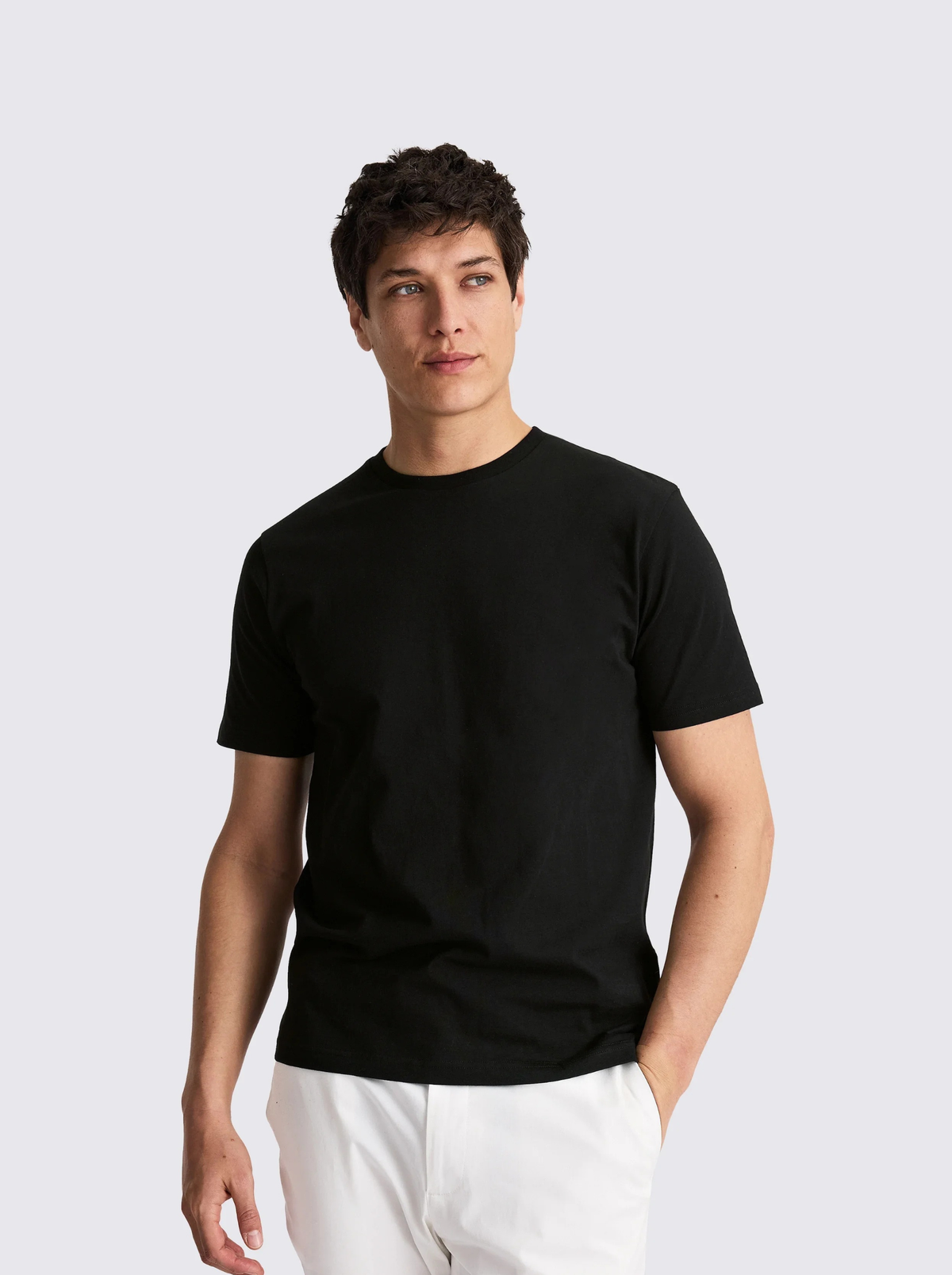
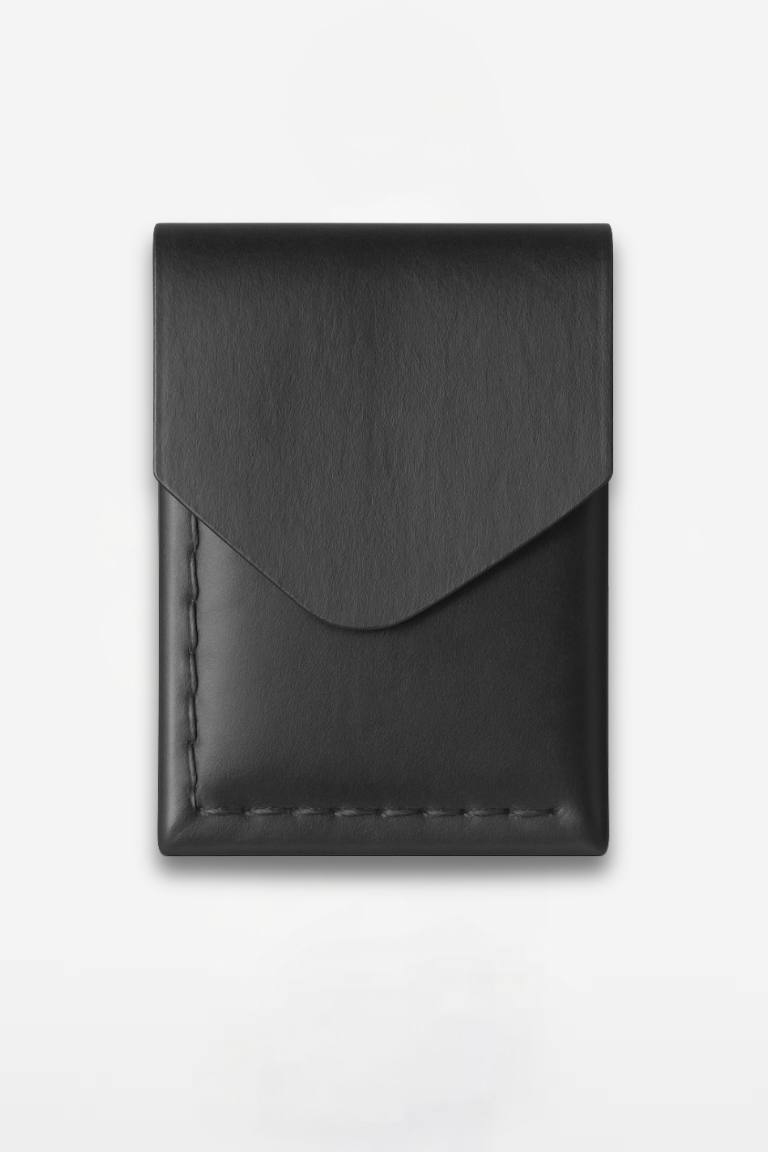
Even reinforced pocket construction has a load ceiling, and daily-carry habits determine how close to that ceiling a wearer operates. Distributing weight across multiple dedicated cargo pockets rather than concentrating a phone, wallet, and keys into two front pockets meaningfully reduces the sustained shear load any single seam experiences — which is the structural argument for utility trousers with dedicated pocket zones in the first place. Within those pockets, carry-item profile still matters: a Slim Minimalist Cardholder Wallet adds negligible bulk and cyclic load compared to a full bifold, meaning fewer wash-cycle flex repetitions at the pocket seam over the garment's life. For lighter everyday rotation where dedicated cargo pockets aren't needed, the same reinforced-construction logic and load-distribution principle carries over to No Fade Black Jeans, paired with Supima Cotton Black T-Shirt or Fade-Resistant Black Shirt on top.
Methodology & Citation Box
Test Protocols
- Abrasion resistance: ISO 12947-2 Martindale method, cycles recorded to first visible thread thinning
- Seam slippage / shear strength: ISO 13936-1 fixed seam load test, reported in kilogram-force (kgf)
- Colorfastness: Spectrophotometer L*a*b* readings at 25-wash checkpoint, knee/crotch panel vs. flat-panel baseline on the same garment
- Wash protocol: 30°C cold wash, neutral detergent, line-dried
Journalist & Researcher Citation Instructions
This report may be cited by materials writers, workwear analysts, and researchers with attribution to the report title and publication year, linked back to the source page.

Leave a comment
This site is protected by hCaptcha and the hCaptcha Privacy Policy and Terms of Service apply.